

Atrocity Ar: Victims of The Troubles Remembered in Irish and English
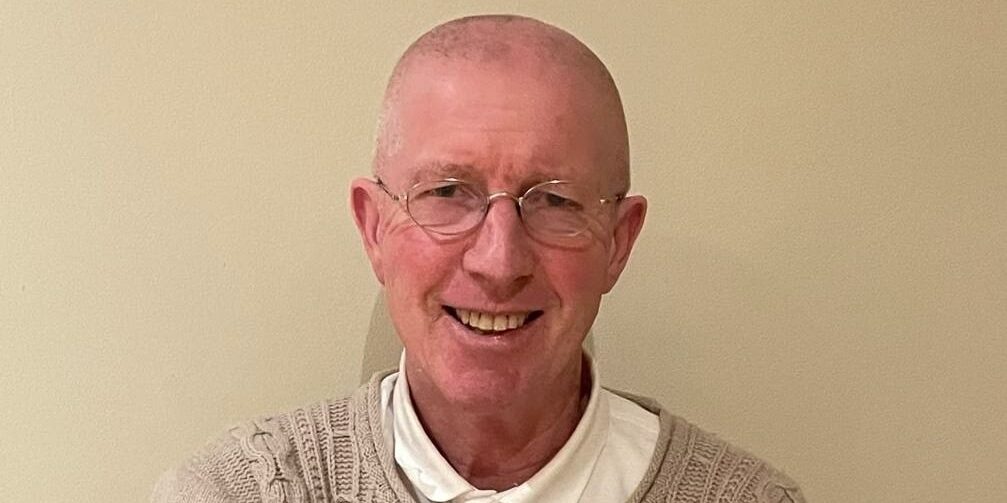
By Dr Ciaran O Coiggligh – A Book Review
We live in a society throughout the world, which can often be categorised as a post truth society, a phenomenon exacerbated but not confined to aspects of social media through misinformation, conspiracy theory and deliberate lies. It is a society where the media environment replaces facts and reportage with commentary and opinion. It isn’t about what is actually happening rather someone’s feeling or interpretation of events. In this maelstrom moral absolutes are viewed with suspicion, particularly when reflecting traditional Judaeo Christian beliefs, which too often are now regarded as the preserve of cranks and freaks, and people are pigeonholed into convenient stereotypes with no nuance of shades of grey. This tendency towards movement away from truth and facts in examining contemporary issues becomes even more distorted when examining the past, even the recent past, which becomes subject to manipulation for a range of particular purposes.
Against this backdrop it is easy for many of us to become cynical or even depressed. Before anyone lapses into such feelings I urge them to read the excellent new book Atrocity Ar written by Dr Ciaran O Coiggligh. It is a relatively short book, which beyond its introduction and foreword stretches to 111 pages, but one which is grounded in truth, fact and above all moral purpose.
If we were to lapse into modern stereotypes of pigeonholing people by their background, the author would seem to fit comfortably as the antithesis of everything that the spirit of unionism and the case for a United Kingdom seems to depend on; he is by background someone from a staunchly Irish Catholic republicans community based in Dublin. The concepts of Britishness, and indeed potential involvement with the victims of the Northern Ireland Troubles seem light years away. The natural assumption would be that someone from that background would either be deeply disinterested in Britishness and the British people, or at worst propagandist and hostile.
Yet the diametric opposite emerges in the book. Atrocity Ar focuses on the victims of the Troubles, remembering them and paying tribute to them. It does so by concentrating on a range of atrocities throughout the Troubles. In each case it lists each of the victims of each event, and produces a short focused poem about each of them. By its own admission it cannot be comprehensive, dealing with 295 victims, a little under 10% of the total deaths.
However, it gives a clear balanced cross section of those who were killed in the Troubles, from all communities such as at La Mon, Enniskillen, Kingsmills, Loughinisland and Ballymurphy. The inclusive nature of the book is highlighted by the unusual format which writes each section in both English and Irish. Ciaran is a fluent Irish scholar, and while the principal focus is on the background of the victims, there is also a cleat attempt to reclaim the use of Irish language from the politicisation and sectarianism of Irish representation.
The book shines through with the humanisation of the victims of the Troubles. Stalin once said that the death of a single person is a tragedy, the death of a million people is a statistic. The book is a sobering reminder that behind the facts and figures of the Troubled lie individuals, their stories and the tragic loss to families. In doing so it relies on the facts and implicitly rejects attempts to rewrite history,
Above all the book has a strong moral core running through it. The single most important theme is what the author describes as the belief in the sanctity of life. In an age of moral ambiguity, the author’s moral compass does not deviate once.
Lord Weir of Ballyholme is a DUP peer in the House of Lords