

United We Stand: The Case for a Unified Unionism in N.I.
United we stand, divided we fall.
It is difficult to trace the exact origin of “Unionism”, not just within mainland UK but the island of Ireland. A good start is to look at 1542 when Henry VIII removed the influence and control of the Pope, declaring himself and successors as “King of Ireland” and bringing a religious edge to matters, increased after the Plantation of Ulster in early 1600s. Act of Union in 1707 unites England and Scotland with 1800 uniting all four of the home nations.
Nevertheless, the origin of political unionism as we recognise it is a much more contested subject. In my view, the formation of the Ulster Unionist Council is the birth of unionism in the modern political era. After the opposition to Gladstone and subsequent attempts to “sell out” unionists in Ireland, Irish unionists, with the vast majority based in Ulster, united to form firm opposition to Home Rule.
The latter part of the 1800s and early 1900s taught unionists a harsh lesson. A lesson unionists appear willing to repeat every generation since. British governments, will continue to fall short of unionists expectations. Even during Confidence & Supply in 2017, unionists couldn’t prevent the British Government prioritising the interests of mainland unionists, especially those in England at the expense of Northern Ireland.
This presents significant challenges for unionism in not only Northern Ireland but Scotland as well. The electoral strength of unionism continues to be fragmented across three main parties in Northern Ireland, with barely a cigarette paper being able to split policies, regardless of what parties argue. Scotland is in many ways similar. Whilst Labour and Conservatives attempt to fight for an electoral upper hand in Scotland, there is a recognition that more unites them than divides them, when it comes to opposition to the SNP. Second only to the possibility of Corbyn as Prime Minister, the SNP is the biggest political threat to the Union in the last number of decades.
“Unite we stand, divided we fall” is used as a warning by many, if not all unionist leaders at some stage in their political careers. I doubt few readers, if any, will disagree that one of unionism’s main failings since its inception has been its failure to unite in common cause. The fact we’ve had too many unionist parties and movements to count underlines this fact.
Even the Northern Ireland Protocol has created numerous divisions, with even the most liberal unionist accepting that it is the biggest existential threat since the IRAs terrorist campaign.
Unity, in my view, will become even more important in the next election cycle. I do not believe unionism in Northern Ireland can continue with three political parties. Moreover, I firmly believe that unionism must continue to reach out to the ‘undecided’ middle ground vote who will win or lose a border poll if it comes.
That goes against the instinct of almost all strategists who feel most comfortable dragging an election campaign into an “us or them” sectarian headcount. The DUP continuing to look over its shoulder at the TUV will elongate this strategy, and although this is effective short term, it is damaging in the long term.
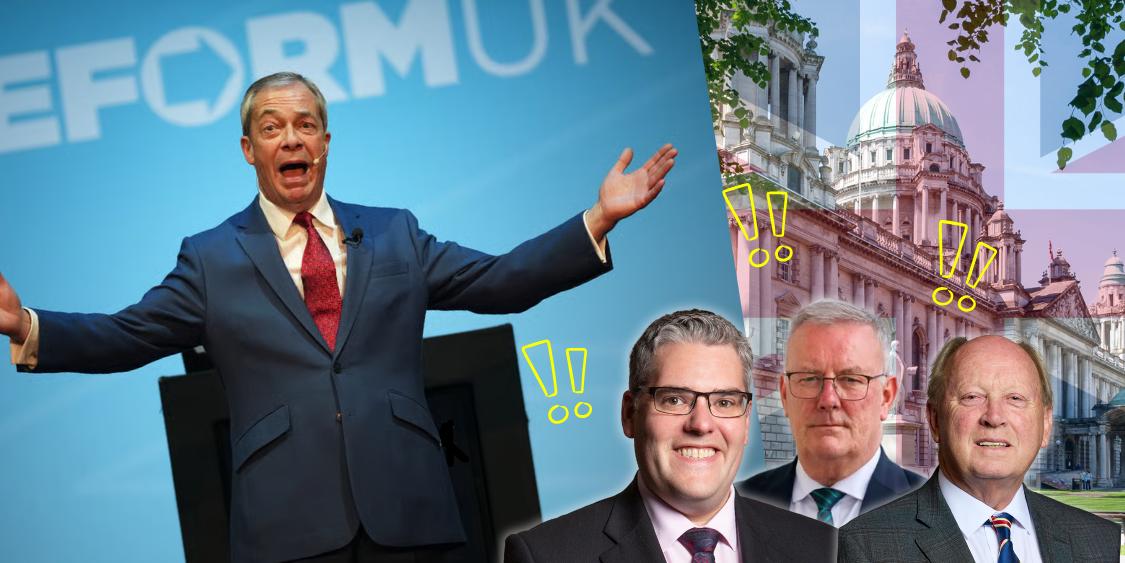
Moreover, we must also be mindful of both the opportunities and the threat from Reform UK. There is no doubt that the populist approach, built around the charismatic Nigel Farage works and will undoubtedly damage the traditional parties. However, as mentioned, Scotland is the lightening Rod for the union. If Reform UK split the “unionist vote” in Scotland, and potentially Northern Ireland too, this will undoubtedly provide opportunities for the SNP to grow electorally. Many opponents of Reform underlined the almost dozen SNP MPs who scraped through due to a fragmented vote.
There is much merit in questioning Nigel Farage’s unionist credentials, regardless of his numerous visits to northern Ireland in the past. I have absolutely no doubt that if Farage ends up as prime minister, he will continue the trend of “selling out” unionism. I am also very mindful that Scotland will make or break the union, thus why many unionist commentators have accepted that a centrist Labour government is probably the best outcome of any election, given how important Scotland is to Labour winning a majority. In other words, unionists across the UK need the ruling party to require seats beyond just England. Unionists need the ruling party to be unionist by accident, as much as design. Either way, it neutralises the SNP and other separatists.
Electoral pacts have been debated for many years but I now believe the time has come for unionism to have a serious strategic body, set up to ensure the unionist vote is maximised across the United Kingdom. This requires party interests to be set aside for the greater good of the union. Even a cursory glance at electoral results would suggest a rise in unionist representation of 10% in the House of Commons is realistic for the next election.
2026 must be the year of clear unionist strategic thinking, with a desired outcome of unity, working to achieve stronger representation at National and local government level.
David Graham is a former SPAD to Arlene Foster and a highly respected Northern Ireland media commentator